Survival at sea
Test and evaluation (T&E) is an important part of optimising surface combatants and submarines. A crucial stage in verification is ensuring your surface warship or submarine is capable of surviving different kinds of sub-surface explosions.
Naval shock testing can be performed during different stages in the development cycle, such as on hull components, hull structures or complete ships or submarines in so-called first-of-class trials. For on-board equipment, shock testing should be performed at the component, subsystem and system level.
At FMV T&E, we can perform all of these shock tests, as well as the evaluation of warhead performance, first as scale trials in the Blast Basin and then as full-scale trials at our Sea Range.
Want to push your naval vessel to its limits?
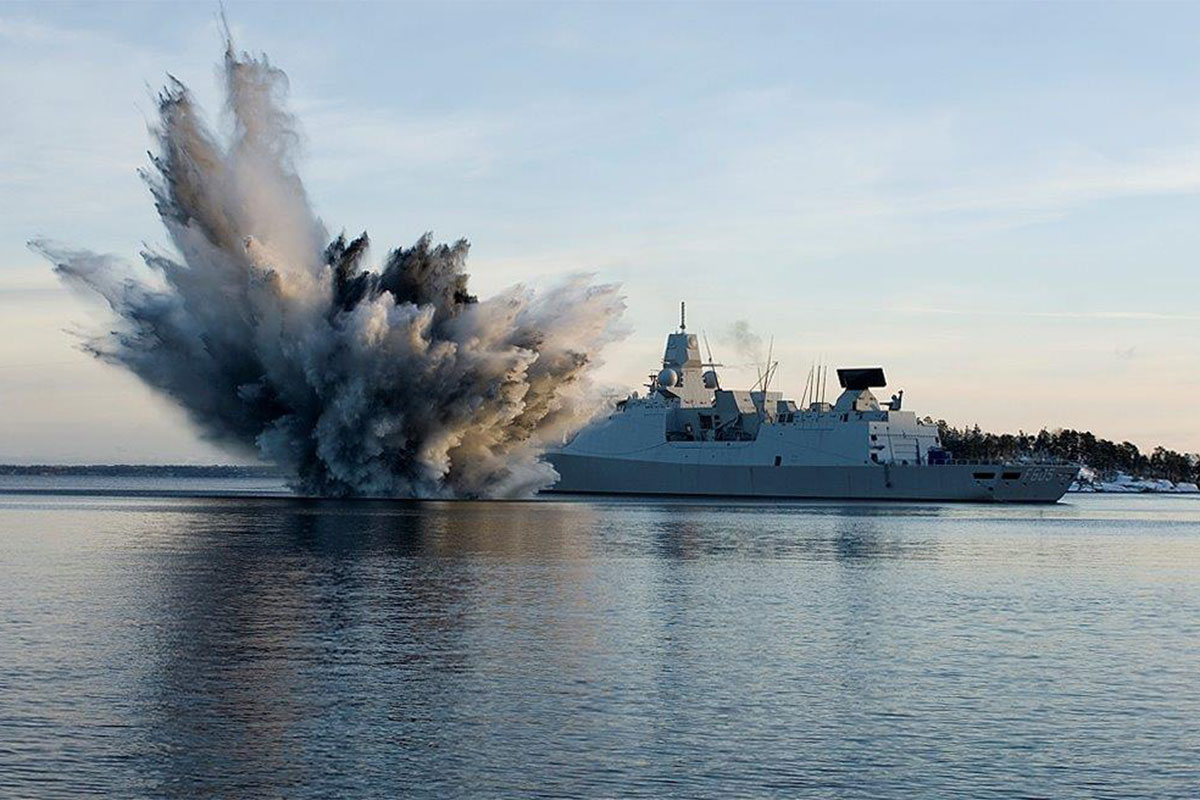
A range of navy shock testing capabilities
Based on Swedish development programs, our FMV Naval Test Ranges have developed different naval shock testing capabilities, from research trials in our Blast Basin to full scale first-of-class shock testing at our Sea Range.
Learn more about the world-class facilities at our FMV Naval Test Ranges
Shock test methodologies
First-of-class trials and full-scale shock testing
This is performed on complete, operational and manned surface ships and submarines at our Härnösand Naval range. The trials can be performed:
- As static or dynamic scenarios for surface ships and submerged submarines
- Using very heavy charges, meaning they can also perform beyond design limit trials
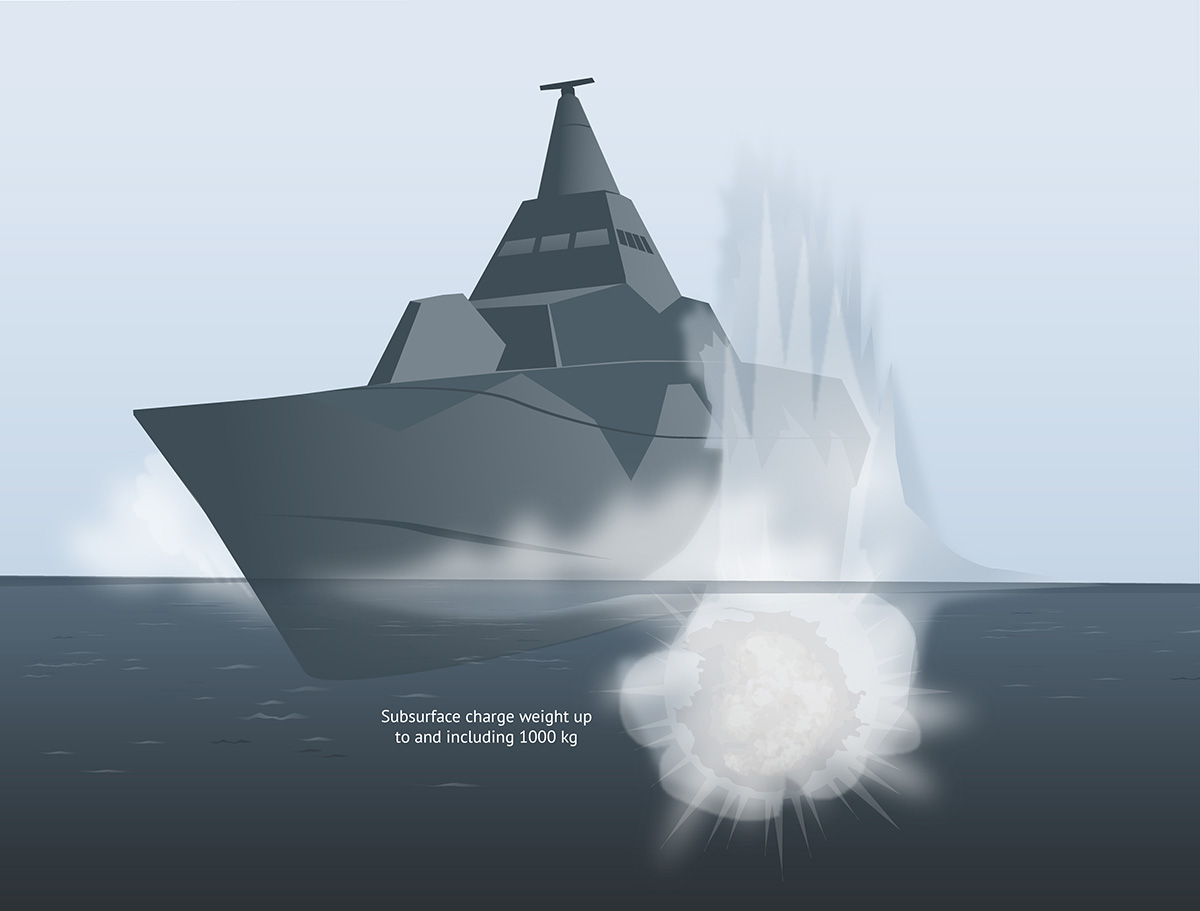
First-of-Class shock trial on surface war ship
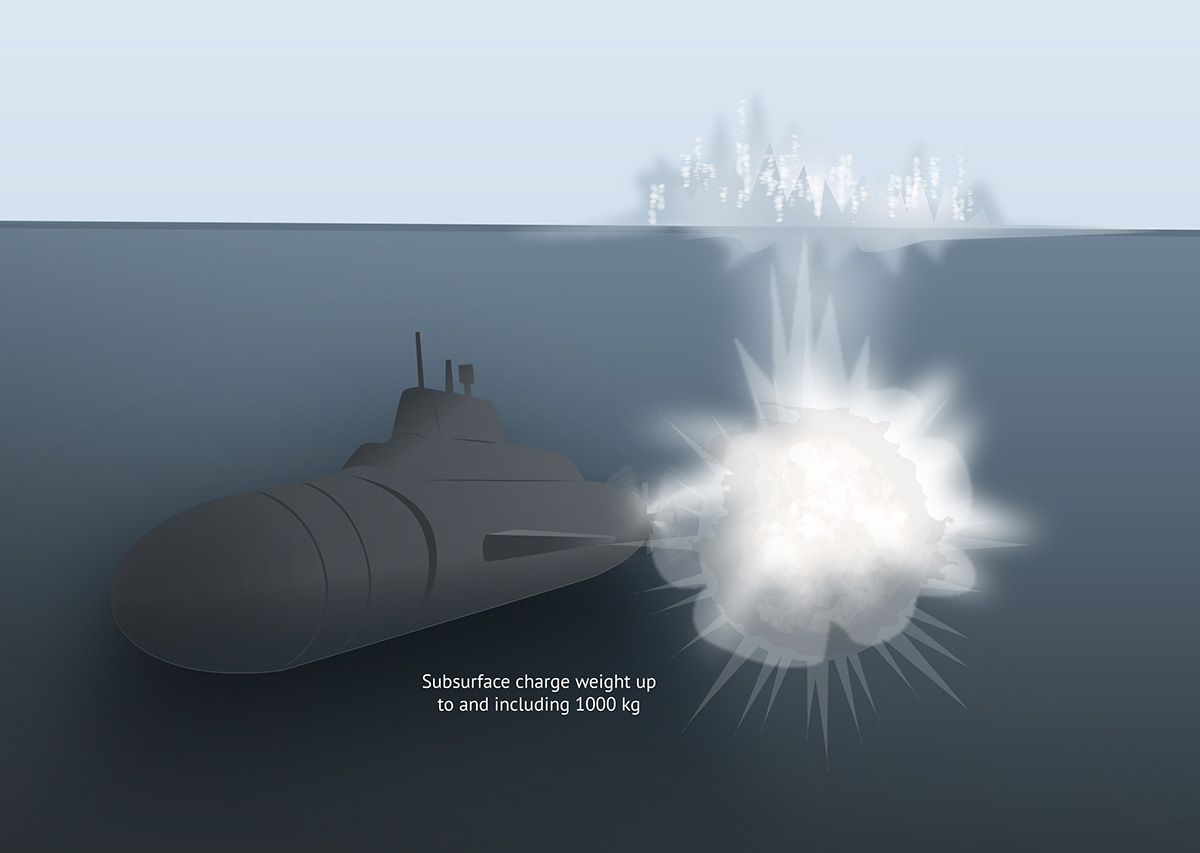
First-of-Class shock trial on submarine in submerged condition
Subsurface shock testing without a blast target
This is performed at one of our Sea Ranges. The area is heavily instrumented to allow advanced post trial analysis. We make it possible to:
- Evaluate how large hull components or complete hull sections withstand the shock from a sub-surface explosion
- Evaluate the shock performance of full-scale mines, depth charges and torpedo warheads
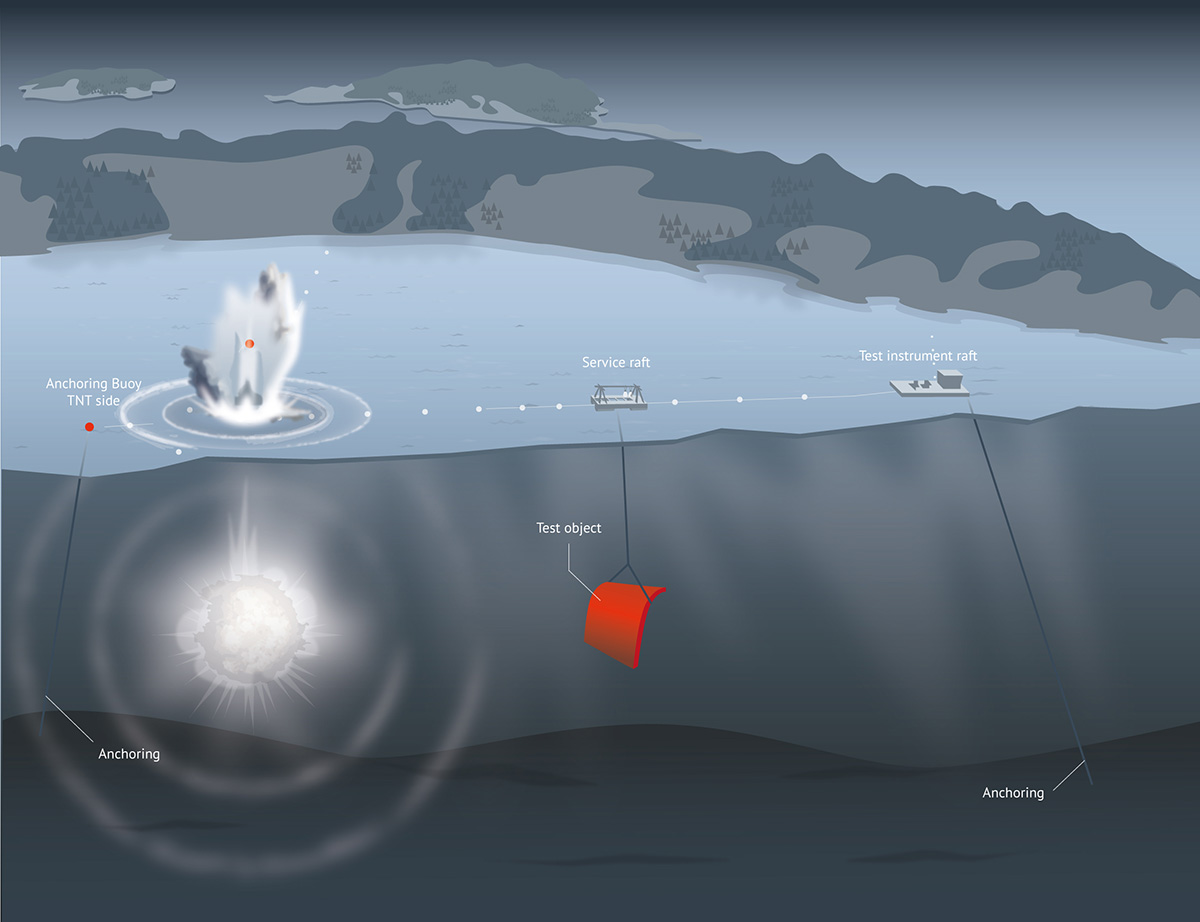
Subsurface shock testing without a blast target
MIL-DTL-901E
Heavy weight shock testing (also called barge testing) is a method we’re currently developing, to allow shock testing of:
- On-board components
- Equipment and systems such as propulsion machinery, electrical cabinets, electrical motors, pumps, crew and weapon consoles
These trials are expected to be performed using a Large Floating Shock Platform (LFSP) with max payload of about 181 Ton (400,000lbs).
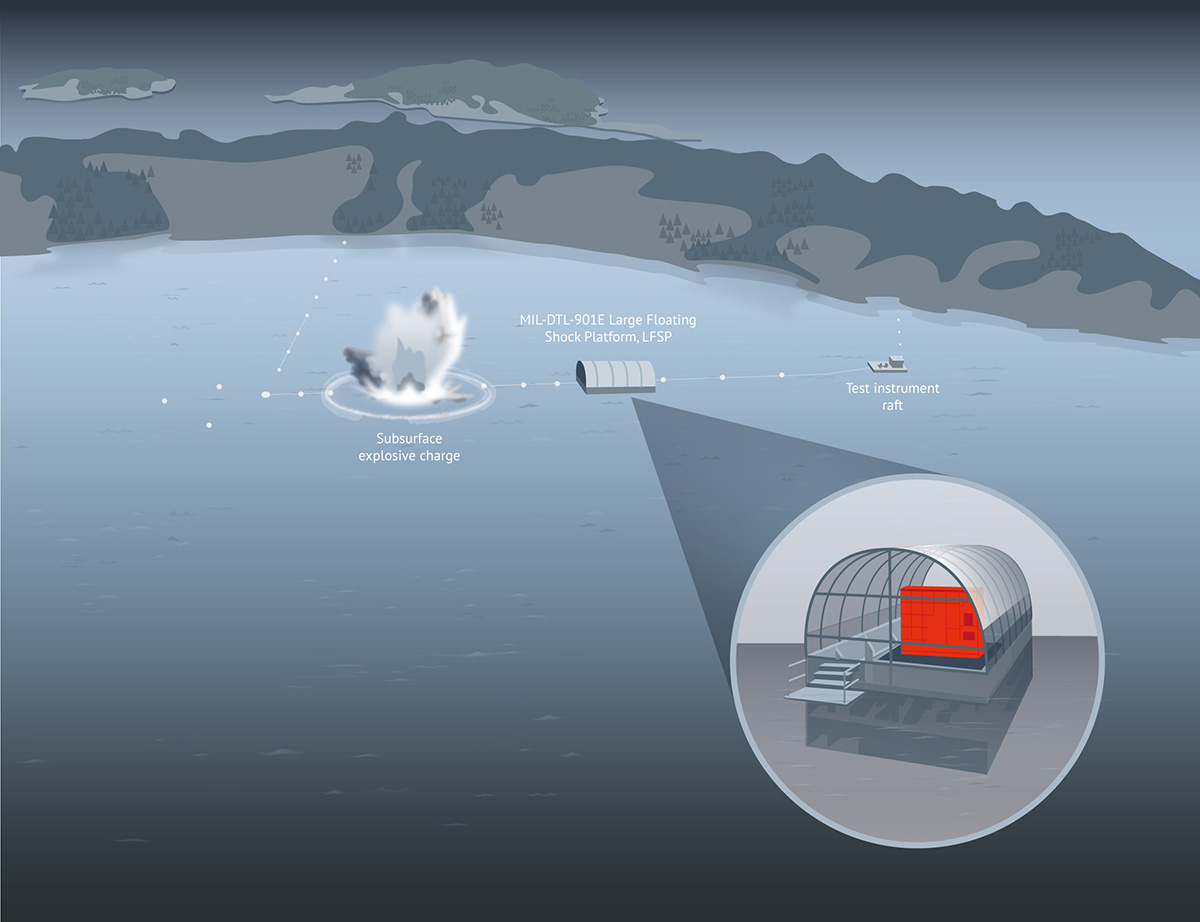
Barge testing
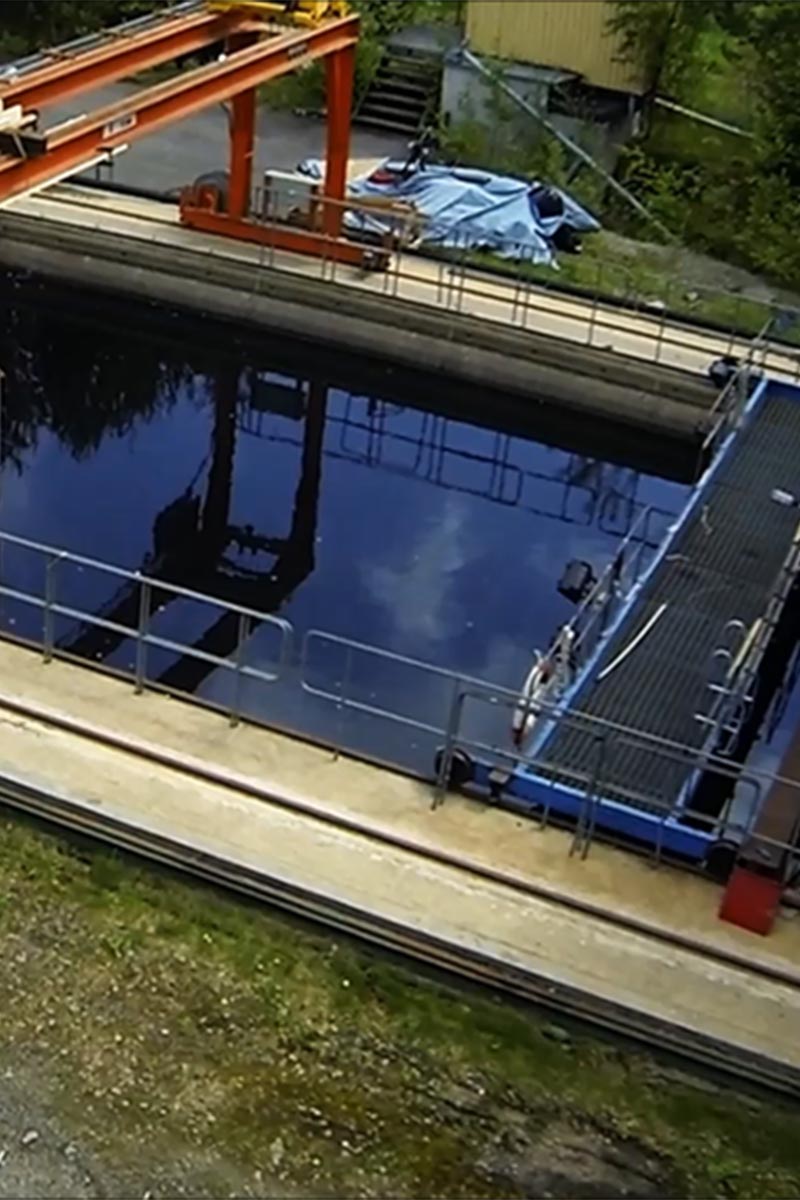
The Blast Basin
The heavily instrumented Blast Basin is used for scale trials to evaluate the blast effects on small hull components. It can also be used to:
- Evaluate the performance of mines, depth charges and torpedo warheads
- Enable advanced post trial analysis